
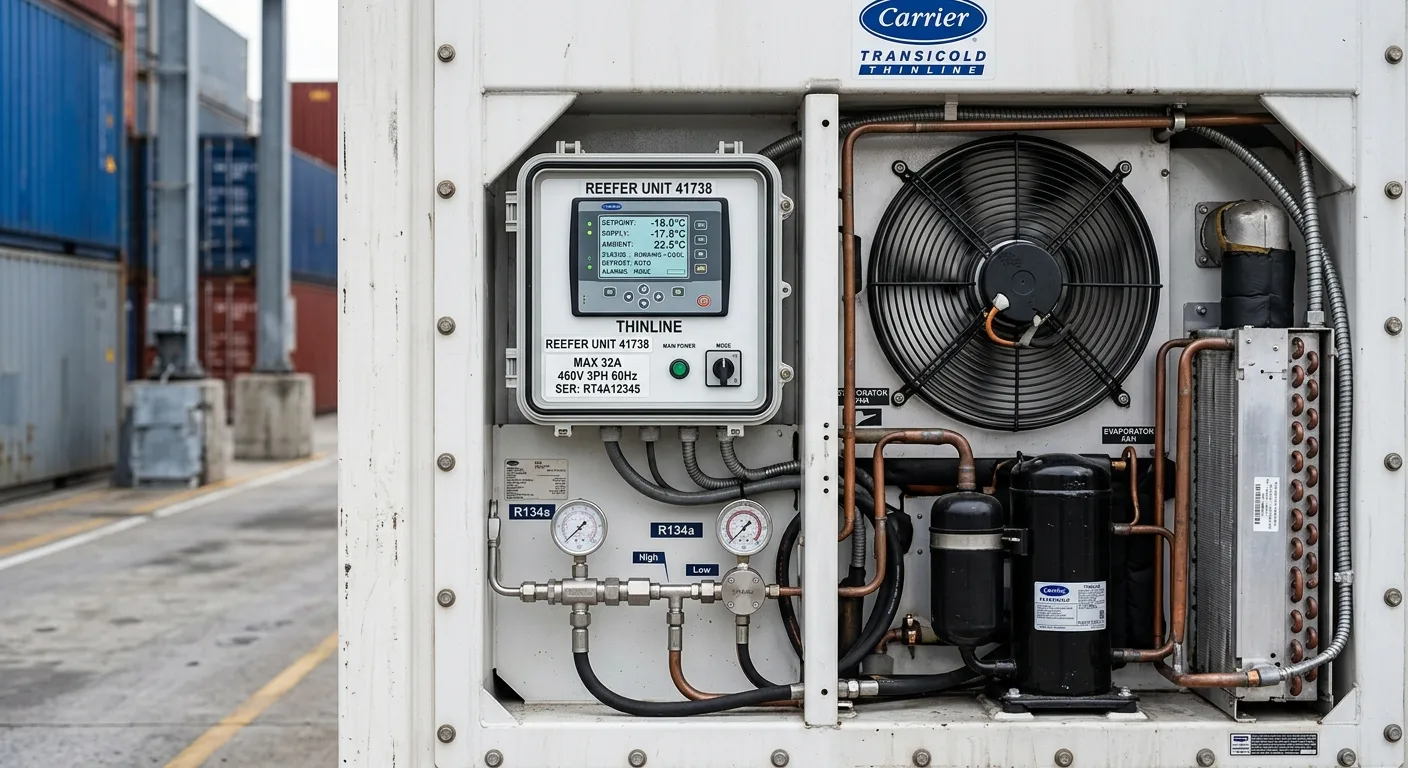
The reefer container ventilation system is one of the most critical components in cold chain transport. Correct ventilation settings preserve cargo freshness, prevent rot and mold formation, and improve energy efficiency. In this article, we will examine reefer container ventilation systems and optimized settings in detail.
How Does the Reefer Container Ventilation System Work?
In reefer containers, ventilation ensures continuous air circulation inside the container and maintains temperature and humidity balance. The basic working principle is:
- Cold Air Production: The refrigeration unit produces cold air through the evaporator located at the front of the container.
- Air Distribution: The produced cold air is distributed throughout the container via T-bar floor channels and ceiling air ducts.
- Air Return: The air passing through the cargo returns to the refrigeration unit, completing the cycle.
- Pressure Balance: Internal air pressure is balanced with the outside environment through small holes in the container walls (pressure relief valves).
Ventilation Settings and Types
| Setting | Description | Application |
|---|---|---|
| Minimum Ventilation | Lowest airflow, cooling only | Frozen goods, sensitive pharmaceuticals |
| Medium Ventilation | Balanced airflow | Fresh food, fruits, vegetables |
| Maximum Ventilation | Highest airflow, humidity control | Fresh flowers, greens, breathing products |
| Humidity-Controlled Ventilation | Adjustable humidity level | Fruits, vegetables, tropical products |
Importance of Ventilation Settings
Choosing the right ventilation setting directly impacts cargo quality and shelf life:
- CO₂ Accumulation: Some fruits and vegetables produce CO₂ during transport. Insufficient ventilation causes CO₂ buildup and premature ripening.
- Humidity Balance: Too much ventilation causes moisture loss, too little causes mold formation.
- Temperature Homogeneity: Proper airflow ensures uniform temperature throughout the container.
- Energy Efficiency: Excessive ventilation increases energy consumption, insufficient ventilation causes cargo loss.
Ventilation Optimization Tips
- Know your cargo: Determine the CO₂ sensitivity, humidity needs, and temperature requirements of the product beforehand.
- Leave air gaps: Leave at least 5-10 cm between pallets and walls.
- Avoid high-stacking: Do not allow cargo to block air channels.
- Periodic checks: Regularly monitor temperature and humidity values during long voyages.
- Professional support: Get support from your reefer container supplier on ventilation settings.
Correct ventilation settings can increase reefer container efficiency by 20-30%. Incorrect settings cause both energy waste and cargo loss.
Frequently Asked Questions
Reefer konteyner havalandırması ne sıklıkla kontrol edilmeli?
Uzun deniz yolculuklarında her 12-24 saatte bir sıcaklık ve nem değerleri kontrol edilmelidir. Kısa yolculuklarda ise kalkışta ve varışta kontrol yeterlidir.
Meyve taşımasında havalandırma ayarı nasıl olmalı?
Taze meyve taşımasında orta veya maksimum havalandırma, nem kontrolü ile birlikte kullanılmalıdır. CO₂ duyarlılığı yüksek meyveler için havalandırma sıklığı artırılmalıdır.
Yetersiz havalandırma ne gibi sorunlara yol açar?
Yetersiz havalandırma CO₂ birikimi, nem dengesizliği, küf oluşumu, erken olgunlaşma ve yük kaybına neden olabilir. Bu durum hem maddi kayıp hem de güvenliksizlik yaratır.
Havalandırma ayarları enerji tüketimini etkiler mi?
Evet, maksimum havalandırma enerji tüketimini artırır. Doğru ayar seçimi hem yük güvenliğini hem de enerji verimliliğini sağlar.