
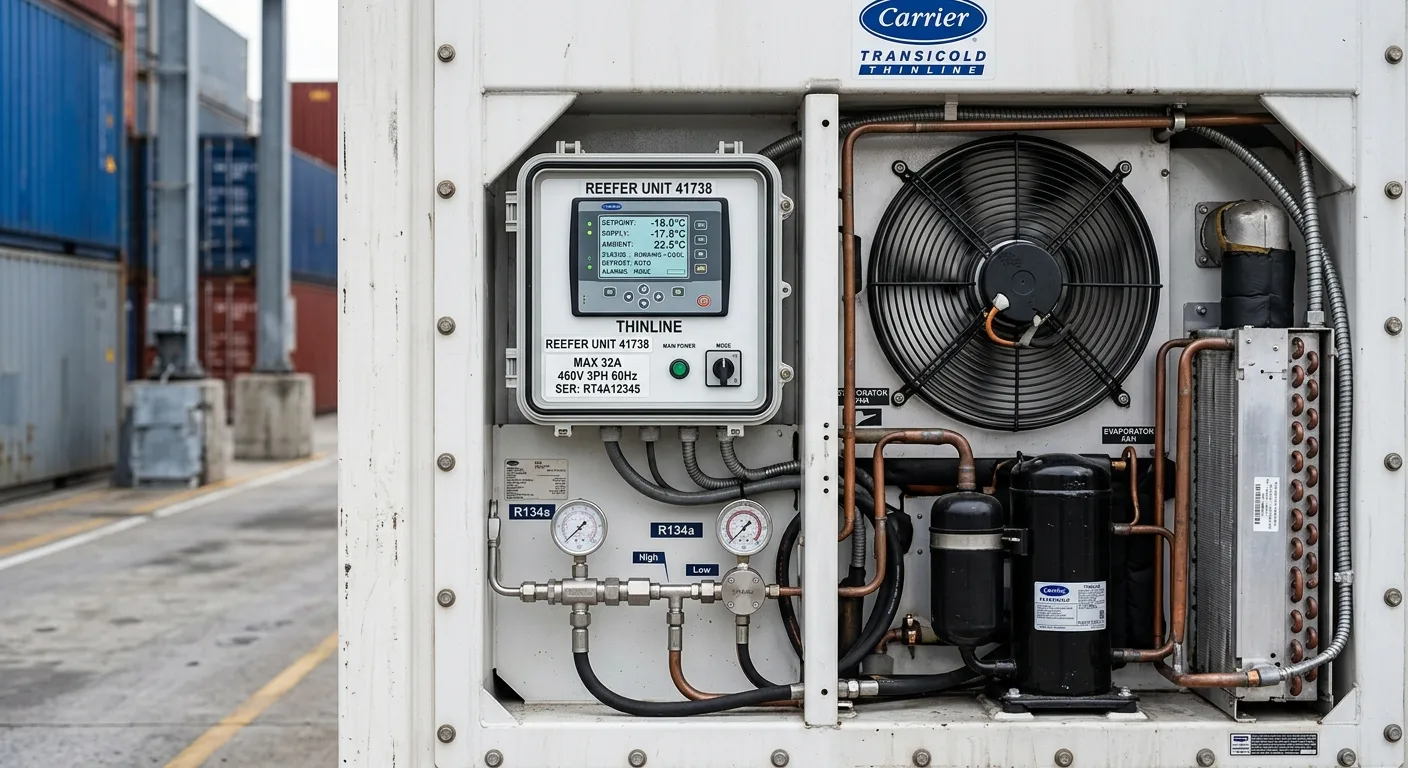
A reefer container (also known as a refrigerated container or frigorific container) is an insulated container equipped with an integrated refrigeration unit, designed for transporting and storing temperature-sensitive cargo. It is the cornerstone of cold chain logistics across food, pharmaceutical, seafood, agriculture, and many other industries.
What distinguishes reefer containers from standard dry containers is the integrated refrigeration unit mounted on the front end. This unit can precisely control the internal temperature between -35°C and +30°C, ensuring that cargo temperature requirements are maintained even during long ocean voyages.
How Does a Reefer Container Work?
The working principle of a reefer container is similar to a domestic refrigerator but far more advanced and powerful. The main operational steps are:
- Refrigeration Unit: The compressor located at the front of the container uses refrigerant to bring the temperature to the adjustable range.
- Insulation: The container walls, floor, ceiling, and doors are lined with specialized insulation materials. This ensures temperature retention and energy efficiency.
- Airflow: Special air ducts and fans ensure uniform temperature distribution throughout the interior. Every point of the cargo stays at the same temperature.
- Humidity Control: Some reefer models also offer humidity control, which is critical for transporting fresh fruits and vegetables.
- Digital Monitoring: Modern reefer containers are equipped with remote temperature monitoring and alarm systems that provide instant alerts for temperature deviations.
Reefer Container Structure
The main components of a reefer container are:
| Component | Description |
|---|---|
| Body | Insulated container body made of stainless steel or aluminum |
| Refrigeration Unit | Integrated compressor system from manufacturers like Carrier, ThermoKing, or Daikin |
| Insulation Panels | Polyurethane foam insulated wall, floor, and ceiling panels |
| Air Ducts | Air channels in the floor and ceiling for uniform temperature distribution |
| Control Panel | Digital control unit displaying temperature, humidity, and operating status |
| Door Seal | Double-sealed insulation door system to prevent temperature loss |
Where Are Reefer Containers Used?
Reefer containers are used in virtually every industry that requires temperature-controlled transportation and storage:
- Food and Beverage: Transport of fresh fruits, vegetables, meat, dairy products, and frozen foods.
- Pharmaceuticals and Healthcare: Cold chain transport of vaccines, biological preparations, and sensitive medications.
- Seafood: Keeping fish, shellfish, and processed seafood products fresh during transport.
- Agricultural Export: Maintaining cold chain for flowers, seeds, and agricultural products in export.
- Chemical and Industrial: Transporting certain chemicals and industrial products at specified temperatures.
Reefer containers are an indispensable part of global cold chain logistics. Every year, millions of tons of temperature-controlled cargo are transported worldwide in these containers.
Frequently Asked Questions
Reefer konteyner ile normal konteyner arasındaki fark nedir?
Reefer konteynerler entegre soğutma ünitesi ve yalıtım panelleriyle donatılmıştır. Normal konteynerlerde ise sıcaklık kontrolü yoktur. Reefer konteynerler -35°C ile +30°C arasında hassas sıcaklık kontrolü sağlar.
Reefer konteynerler elektrikle mi çalışır?
Evet, reefer konteynerler elektrikle çalışır. Gemi bağlantılarından veya jeneratörlerden (genset) elektrik alır. Kara taşımacılığında ise dizel jeneratör kullanılır.
Reefer konteynerların enerji tüketimi ne kadardır?
Enerji tüketimi konteyner boyutu, ayarlanan sıcaklık ve dış ortam sıcaklığına göre değişir. Ortalama bir 40' reefer konteyner saatte 3-7 kW enerji tüketir.
Reefer konteynerlar kaç yıl kullanılabilir?
Düzenli bakım ve onarım ile bir reefer konteyner 15-20 yıl kullanılabilir. Ancak soğutma ünitesi ömrü genellikle 10-15 yıldır ve yenilenmesi gerekebilir.